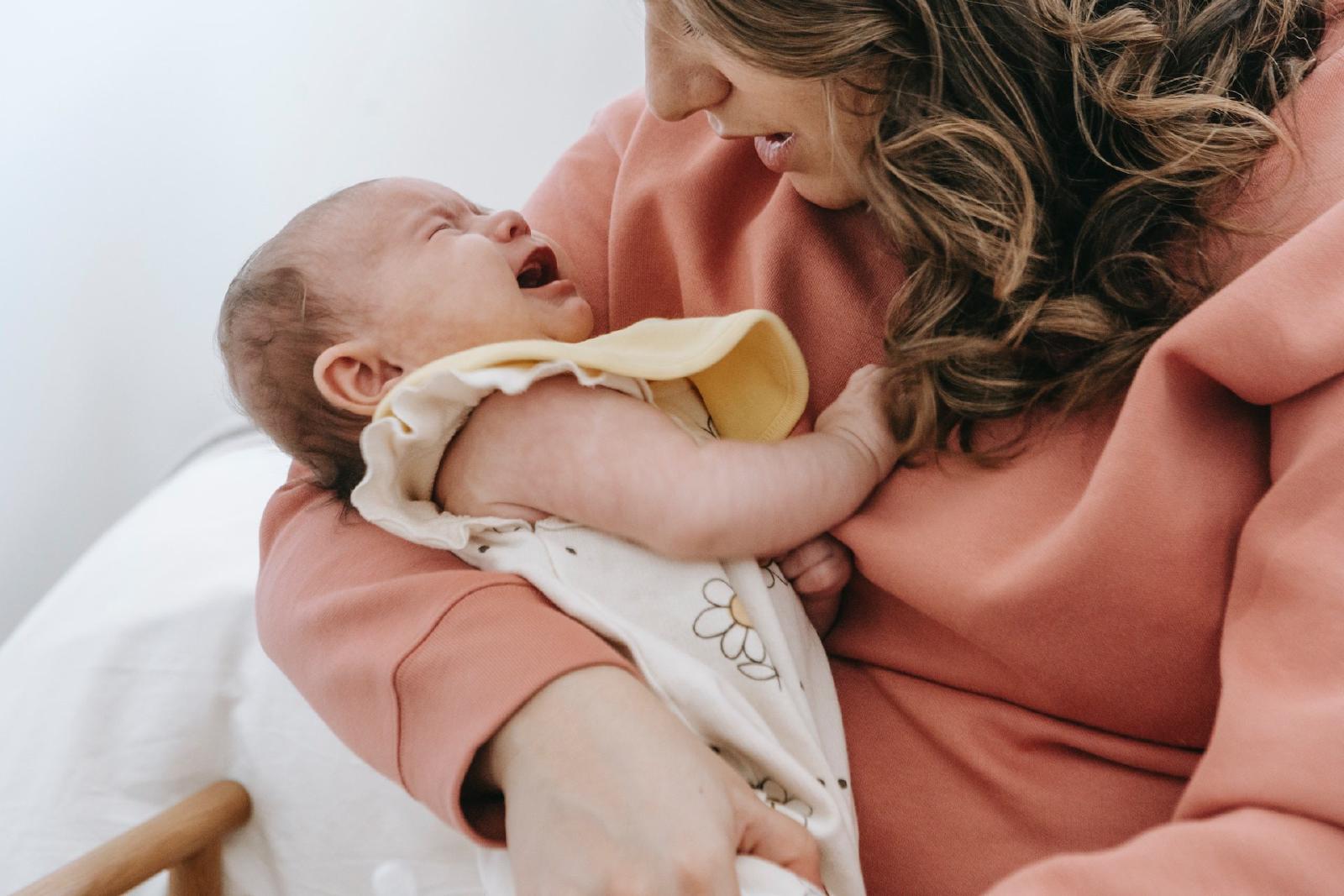
In the first 10 days your body adjusts its hormone levels and the uterus begins to shrink back. That can be quite demanding on your body. If you had birth injuries, rest is especially important so they can heal properly. After a caesarean section this is particularly crucial. Recovering well during the postpartum period is essential.
Your postnatal midwife will help you after the birth and give you many useful tips.
Tip: Women with statutory health insurance are entitled to midwife support for twelve weeks after birth. If needed, this can continue until the end of breastfeeding.
Lochia (Postpartum Bleeding)#
Lochia occurs when the placenta has detached. The uterus contracts to return to its original size, and bleeding follows. Blood, dead tissue, and secretions are expelled. In the first days the flow is heavier and gradually becomes lighter. This can last about four to six weeks.
During lochia, certain things should be observed to avoid complications.#
Use pads and liners — avoid tampons
Take sitz baths only if your doctor or midwife agrees
If you feel like having sex towards the end of the postpartum period, only do so after consulting your midwife or doctor — and always use a condom
After eight weeks you should see your gynaecologist for a follow-up examination
Your Period#
You are probably wondering when you will get your first period after giving birth. There is no fixed answer, but breastfeeding can play a role. If you do not breastfeed, your first period may return after about eight weeks. If you breastfeed, it can take several more weeks or even months.
Possible Discomfort During the Postpartum Period#
- Sweating due to hormonal changes
- Fatigue
- Bloating
- Constipation
- Headaches
- Engorgement
- Fever
If you have a fever or feel unwell in general, contact your midwife or gynaecologist.
Baby Blues#
After birth, hormones shift and that can cause mood swings. These are known as the baby blues and may include anxiety, low mood, lack of motivation, crying, feelings of guilt, and more. They should not be confused with postpartum depression. Your midwife will ask questions to determine whether you are affected. If you notice psychological changes in yourself, speak to your midwife or gynaecologist.
Preparing for the Postpartum Period#
It is advisable to prepare before the birth. Shopping with a newborn can be very difficult. You will need certain things during the postpartum period, so build up a supply in advance.
- Plenty of pads for lochia (can last up to 6 weeks)
- Nursing pads and nipple cream if you breastfeed
- Everything needed to care for your baby
- Plenty of food and drinks
- Ideally prepare meals in advance and freeze them
Uterine Recovery#
It is very important to do exercises for uterine recovery — specialised postnatal courses are available. Once you have given your body enough time to recover and feel fit again, you can slowly start postnatal gymnastics after consulting your doctor or midwife. After a vaginal birth you should wait at least six weeks; after a caesarean section about eight to ten weeks. More intensive sports should wait until after the postnatal course — and only with your doctor’s approval.